Do You Need Helicopter Rescue Insurance for Trekking in Nepal?
A standard travel insurance policy won't cover you in the Himalayas. Here is what you need to know about high-altitude rescue insurance.
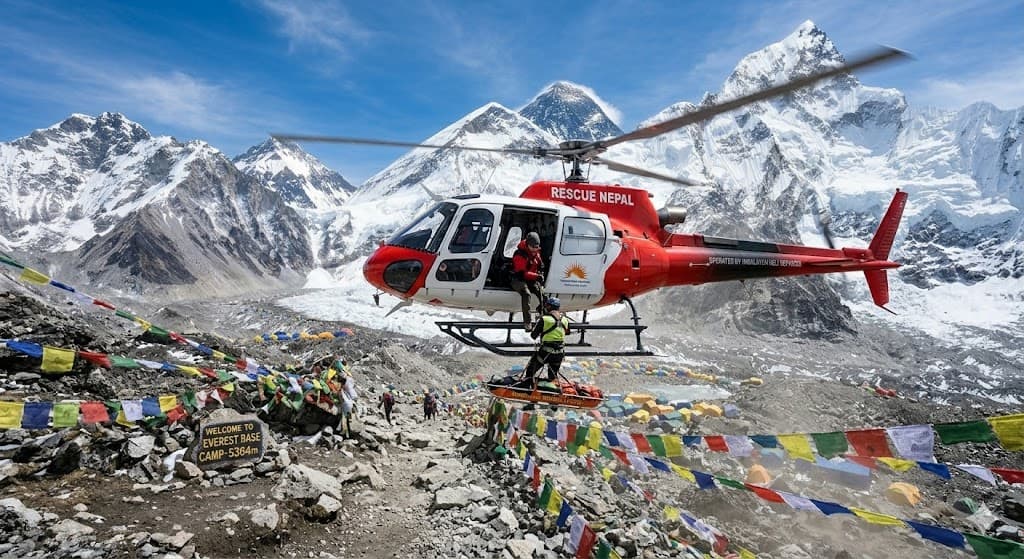
It is the one thing no trekker wants to think about, but everyone must prepare for. If you break an ankle descending from Everest Base Camp, or suffer from severe Acute Mountain Sickness (AMS) at 4,500 meters, an ambulance cannot reach you.
In the remote Himalayas, the only way down in a medical emergency is via a helicopter evacuation. Comprehensive high-altitude insurance is not just a recommendation; it is an absolute necessity.
The Cost of an Uninsured Rescue
Helicopter evacuations in Nepal are incredibly expensive. Depending on your altitude, the weather conditions, and the distance to Kathmandu, a single private helicopter rescue will cost between $5,000 and $10,000 USD.
Helicopter companies will not dispatch a pilot until they have a guarantee of payment. Without proper insurance, you will be forced to put this massive charge on a personal credit card before you are rescued.
What Your Insurance MUST Cover
Standard travel insurance usually caps out at 2,500m or 3,000m (the height of a typical ski resort). When purchasing a policy for Nepal, you must call the provider and ensure the policy explicitly states the following:
EBC is 5,364m. If your policy caps at 4,000m, it is completely void the moment you pass Dingboche.
Ensure it covers the actual flight out of the mountains, not just the hospital bills once you arrive.
This covers the cost of flying you back to your home country with medical staff if you are severely injured.
Reading the Fine Print
Insurance companies look for reasons to deny expensive claims. Do not give them one. There is a very common loophole you must be aware of:
The "Registered Guide" Clause
Many top-tier insurance policies state that your coverage is only valid if you are trekking with a licensed, government-registered guide. If you trek solo or hire an unregistered porter off the street, the insurance company may legally deny your rescue claim.
This is another reason why booking directly through our platform is crucial—we ensure all our local guides hold official government licenses, protecting your insurance policy.
Recommended Providers
While we cannot sell you insurance, we can tell you who the community trusts. Companies like World Nomads and Global Rescue are highly popular among Himalayan trekkers. They understand the region, they understand altitude sickness, and most importantly, they have direct relationships with local helicopter companies to authorize rapid rescues without forcing you to pay cash upfront.
"Buy the best policy you can find, carry the physical emergency contact card in the top pocket of your backpack, and pray you never have to use it."