Physical Preparation: How Fit Do You Need to Be for Annapurna Base Camp?
Worried about your fitness? Find out exactly what physical challenges await on the ABC trek and how to train for them.
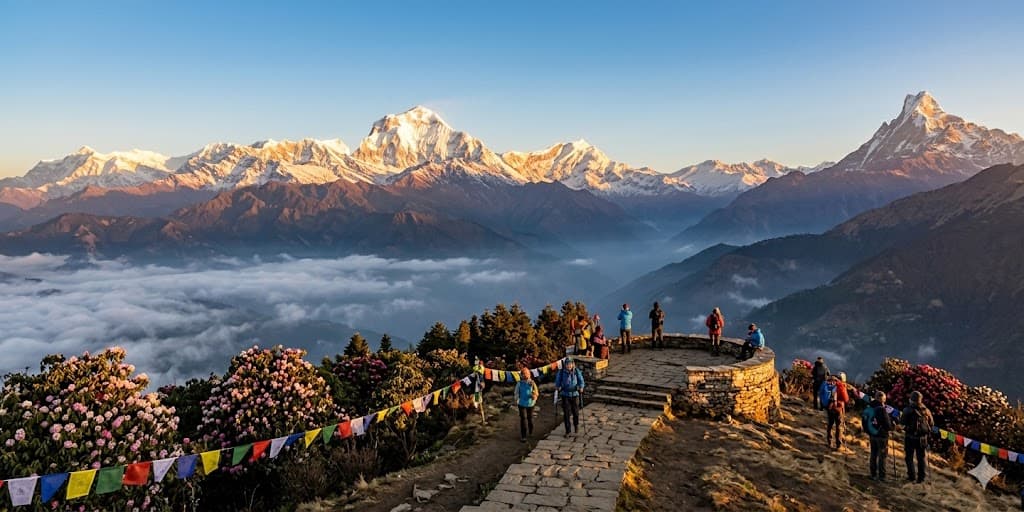
The Annapurna Base Camp (ABC) trek is frequently heavily marketed by travel agencies as a "moderate" trek, making it incredibly popular for beginners and casual hikers.
However, it is vital to understand that "moderate" in the Himalayas means something very different than "moderate" in your local state park. You will still be walking 5 to 7 hours a day through steep, relentless terrain. Here is exactly what awaits you and how to train for it.
The "Moderate" Myth
ABC is considered moderate only because it has a lower maximum elevation (4,130m) compared to Everest Base Camp (5,364m) or the Annapurna Circuit (5,416m). The risk of severe altitude sickness is much lower. However, the physical exertion on your legs is arguably just as hard, if not harder.
1. The Challenge of the Stairs
The defining physical feature of the Annapurna region is the stone stairs. You will not be walking up smooth, graded dirt paths; you will be climbing uneven, rocky steps built into the mountainside by locals centuries ago.
The Ulleri Climb
On day two or three, you will face the infamous Ulleri stairs. This is a relentless climb of over 3,200 consecutive stone steps. It is a grueling morning that will test your willpower.
The Chhomrong Drop
To reach Base Camp, you must descend thousands of steps down into the Chhomrong valley, cross a suspension bridge, and immediately climb thousands of steps right back up the other side.
2. How to Train Your Body
Cardiovascular Endurance
While not as high as Everest, 4,130m is still high altitude. The air is noticeably thin. You need to build your lung capacity starting 3-4 months before your trip.
Leg Strength and Core
Your lungs will burn on the way up, but your knees and quads will take a brutal beating on the steep descents coming back down from Base Camp.
The Ultimate Knee-Saver: Trekking Poles
Do not attempt the Annapurna Base Camp trek without a pair of high-quality trekking poles. Using two poles correctly reduces the impact force on your knees by up to 25% on downhill sections. They also provide crucial stability when crossing muddy patches or slippery snow near the sanctuary. You can rent or buy them cheaply in Kathmandu or Pokhara before you start.
"You do not need to be an Olympic athlete to reach the Annapurna Sanctuary, but treating your training with respect ensures you will actually enjoy the view when you get there."